Introduction
A steak knife is more than just a tool; it's essential for elevating your dining experience. Whether you're cutting into a perfectly seared ribeye or a tender filet mignon, the right steak knife makes all the difference. But with so many materials available, what is the best material for steak knives?
In this article, we’ll explore the top materials used for steak knives, including stainless steel, high carbon steel, Damascus, and ceramic. By understanding the pros and cons of each, you'll be better equipped to choose the best knife for your needs.
Why Material Matters for Steak Knives
The Role of the Material in Knife Performance
The material of the blade directly impacts the cutting performance of steak knives. It influences how easily the knife slices through meat, whether it retains its sharpness over time, and how much maintenance it requires.
For instance, stainless steel is known for its durability and resistance to corrosion, making it an excellent choice for steak knives. It holds its edge well and can withstand frequent use in the kitchen. On the other hand, carbon steel offers superior sharpness and edge retention, but it requires more maintenance to prevent rusting. Damascus steel, with its layered construction, provides both beauty and performance, making it a top choice for enthusiasts. Ceramic blades, while not as common, offer extreme sharpness and precision but can be fragile.
Durability and Longevity of Steak Knives
Steak knives are often used frequently, so selecting a durable material is crucial for ensuring the knife lasts. The material of the blade will impact how long it holds its edge and how well it resists wear and tear. Stainless steel, for example, is highly resistant to corrosion and rust, ensuring long-term durability with minimal upkeep. High-carbon steel, while sharper, is more prone to rust if not properly maintained. Damascus steel offers a balance of strength and beauty, but its high cost and need for careful maintenance may be a deterrent for some.
Popular Materials for Steak Knives
Stainless Steel Steak Knives
Stainless steel is the most commonly used material for steak knives, thanks to its corrosion resistance and ease of maintenance. It typically contains chromium, which forms a protective layer that helps prevent rusting. This makes stainless steel knives low-maintenance and durable.
Benefits: Stainless steel blades are rust-resistant and easy to clean, making them ideal for everyday use. They also retain their sharpness for a reasonable period, offering a good balance between performance and maintenance.
Drawbacks: While stainless steel is highly durable, its edge retention may not be as long-lasting as high-carbon steel or Damascus steel. Over time, it may require sharpening more frequently.
High Carbon Steel Steak Knives
High carbon steel steak knives are prized for their superior sharpness and edge retention. The high carbon content in the blade allows it to take a finer edge, making it ideal for slicing through tough cuts of meat with precision.
Benefits: High-carbon steel knives offer exceptional sharpness and are easier to sharpen than stainless steel. They can hold their edge longer, making them a great option for those who prefer minimal sharpening.
Drawbacks: High-carbon steel is more prone to rust and staining, especially if the knife is not properly dried and maintained. These knives require more care, including regular oiling to prevent corrosion.
Damascus Steel Steak Knives
Damascus steel is known for its unique patterns and strength. It is made by layering different types of steel, which are then folded and welded together. This process results in a blade that is both beautiful and highly functional.
Benefits: Damascus steel offers superior edge retention and strength, making it a great option for steak knives. The aesthetic appeal of the blade's unique pattern also adds to its allure, making it a standout piece in any kitchen.
Drawbacks: Damascus steel knives tend to be more expensive due to the labor-intensive manufacturing process. Additionally, they require more maintenance to prevent rust, similar to high-carbon steel knives.
Ceramic Steak Knives
Ceramic blades are known for their extreme sharpness and long-lasting edge. Made from zirconium oxide, ceramic blades are incredibly hard and retain their sharpness much longer than metal blades.
Benefits: Ceramic blades offer unparalleled sharpness and precision. They are also non-reactive, meaning they won’t alter the taste of the meat, making them ideal for preserving the natural flavors of your steak.
Drawbacks: Ceramic knives are brittle and can chip or break if dropped or used improperly. They also require professional sharpening, as they cannot be sharpened easily at home.
Material | Pros | Cons | Best For |
Stainless Steel | Durable, corrosion-resistant, low maintenance | May not hold edge as long as others | Everyday use, low maintenance |
High Carbon Steel | Excellent sharpness, good edge retention, easy to sharpen | Prone to rust, requires more care | Precision cutting, regular use |
Damascus Steel | Beautiful, strong, excellent edge retention | Expensive, requires maintenance | High-end dining experiences |
Ceramic | Extremely sharp, non-reactive, preserves food flavors | Brittle, can chip easily | Tender cuts, high precision |
Blade Design and Material: Serrated vs Non-Serrated
Serrated Blades: Pros and Cons
Serrated steak knives feature a jagged edge that makes them ideal for cutting through tougher meats with a crispy crust. The teeth of the serrated blade help grip the meat, allowing for an easier cut.
Benefits: Serrated blades excel at cutting through tougher, thicker steaks, such as those with a crispy crust. They don’t require frequent sharpening and can remain functional for longer periods.
Drawbacks: While serrated knives can stay sharp for longer, they often tear through meat fibers rather than cutting cleanly. This can affect the texture and presentation of the steak. Additionally, sharpening a serrated knife can be more challenging than a non-serrated one.
Non-Serrated Blades: Why They’re Ideal for Steak
Non-serrated steak knives have a smooth, straight edge that offers cleaner cuts through meat, maintaining its tenderness and presentation. These knives are preferred by many for high-end dining experiences.
Benefits: Non-serrated blades offer clean, precise cuts and are easier to sharpen compared to serrated knives. The smooth edge allows for better control, which is essential when slicing premium cuts of meat.
Drawbacks: Non-serrated knives require more frequent sharpening than serrated knives, as their edge can dull more quickly with heavy use. However, the investment in regular sharpening is often worth the superior cutting performance.
Feature | Serrated Steak Knives | Non-Serrated Steak Knives |
Cutting Ability | Best for tougher, crusty meats | Clean cuts, ideal for tender meats |
Sharpness | Holds edge longer without frequent sharpening | Needs regular sharpening but easier to maintain |
Maintenance | Lower maintenance, but hard to sharpen | Requires more maintenance but can be re-sharpened easily |
Handling | Easier to use for rougher meats | Provides better control and finesse |
Handle Materials and Ergonomics
Wooden Handles
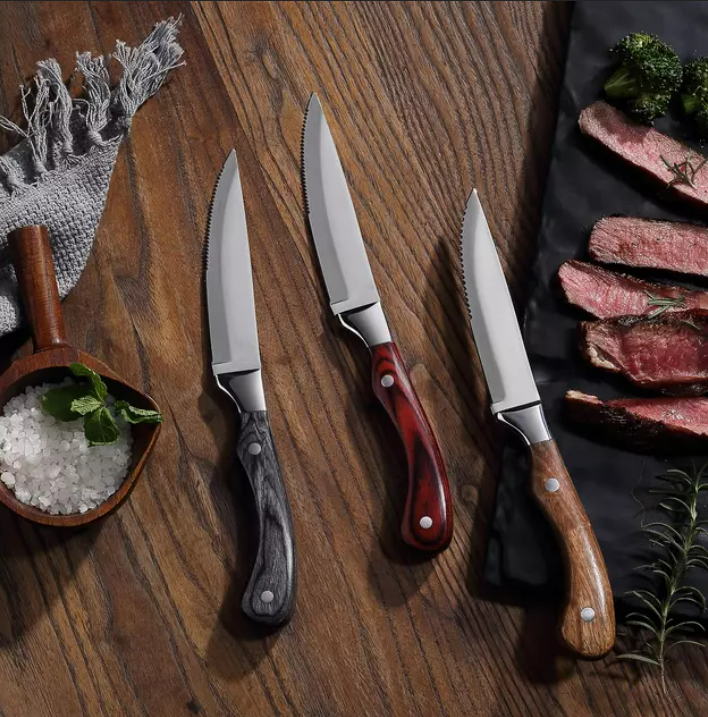
Wooden handles, made from materials like walnut or olive wood, are popular for their aesthetic appeal and comfort. They provide a natural look that complements the elegance of the blade.
Benefits: Wooden handles offer a comfortable grip and are ergonomically designed to reduce hand fatigue. They also provide a traditional, high-quality appearance.
Drawbacks: Wooden handles require more care to prevent damage from moisture and wear. They must be regularly oiled to maintain their finish and durability.
Synthetic Materials: G-10 and Micarta
G-10 and Micarta are synthetic materials known for their durability and moisture resistance. These materials are often used in professional kitchens due to their practical benefits.
Benefits: Synthetic handles are resistant to moisture, making them ideal for everyday use. They are also non-slip, offering a secure grip even when wet.
Drawbacks: Synthetic materials may not offer the same aesthetic appeal as wooden handles, and their texture can sometimes feel less natural in the hand.
Handle Material | Pros | Cons | Best For |
Wood | Aesthetic, natural, comfortable grip | Requires care, may crack over time | Elegant dining experiences |
G-10 | Durable, moisture-resistant, non-slip | Can feel less natural | Everyday use, professionals |
Micarta | Strong, moisture-resistant, high durability | Heavier than wood or plastic | Professional kitchens |
How to Choose the Best Material for Your Steak Knives
Intended Use and Frequency of Use
If you use steak knives frequently, durability and ease of maintenance should be your primary concern. Stainless steel or high-carbon steel knives are ideal for everyday use, while Damascus steel may be better suited for special occasions.
Budget Considerations
When choosing steak knives, consider your budget. Stainless steel knives tend to be more affordable, while Damascus and high-carbon steel knives offer superior performance at a higher price point.
Personal Preference: Style and Comfort
Personal preference plays a significant role in choosing the best material for your steak knives. If you prefer a traditional, rustic look, wooden handles may appeal to you. If you value durability and low maintenance, synthetic handles may be the better choice.
Conclusion
Choosing the best material for steak knives is key to enhancing your dining experience. Stainless steel is durable and low-maintenance, while high-carbon steel provides excellent sharpness and edge retention. Damascus steel is beautiful and functional but requires care, while ceramic excels at sharpness and preserving food flavors, though it can be brittle. Ultimately, the best material depends on your preferences, use, and budget. Garwin offers high-quality steak knives crafted from premium materials to elevate your steak experience and ensure lasting enjoyment at every meal.
FAQ
Q: What is the best material for steak knives?
A: The best material for steak knives depends on your needs. Stainless steel offers durability and low maintenance, while high-carbon steel provides excellent sharpness. Damascus steel combines beauty and functionality, and ceramic excels in sharpness but can be brittle.
Q: Are high-carbon steel steak knives better than stainless steel?
A: High-carbon steel steak knives are sharper and maintain their edge longer than stainless steel. However, they require more maintenance to prevent rust. Stainless steel is easier to care for but may need more frequent sharpening.
Q: How do I maintain my steak knives?
A: To maintain steak knives, hand wash them and dry immediately to avoid rust. Regularly sharpen your knives using a honing rod to keep them in optimal condition.
Q: Why are some steak knives serrated and others not?
A: Serrated steak knives are ideal for tougher cuts of meat, as their jagged edge helps cut through without tearing. Non-serrated knives provide cleaner cuts and are easier to sharpen, making them the preferred choice for high-end steak knives.
Q: Can ceramic steak knives be used for all types of meat?
A: Ceramic steak knives excel at slicing through tender meats, preserving the flavors. However, they can be brittle and are not suitable for cutting through tough or bone-in meats.