You may ask if a Forged Knife or a stamped knife is better. The answer depends on what you want in your kitchen. Many people at home pick stamped knives. They cost less and are simple to use. Forged knives are still liked by chefs in restaurants. They are strong and last a long time. In 2023, stamped knives sold more in the world. The market was worth about $1.13 billion. Here is a quick look at how these knives are different:
Feature | Forged Knives | Stamped Knives |
Weight and Balance | Heavier, stable | Lighter, sometimes unbalanced |
Durability | Lasts for decades | Shorter lifespan |
Price | More expensive | More affordable |
Key Takeaways
Forged knives weigh more and last longer. They are good for hard kitchen jobs.
Stamped knives are lighter and cost less. They are great for daily cooking and saving money.
Think about how you cook and what you like before picking a knife.
Forged knives stay sharp longer. You do not need to sharpen them as much.
Hold different knives to see which one feels best before you buy.
Forged Knife Overview
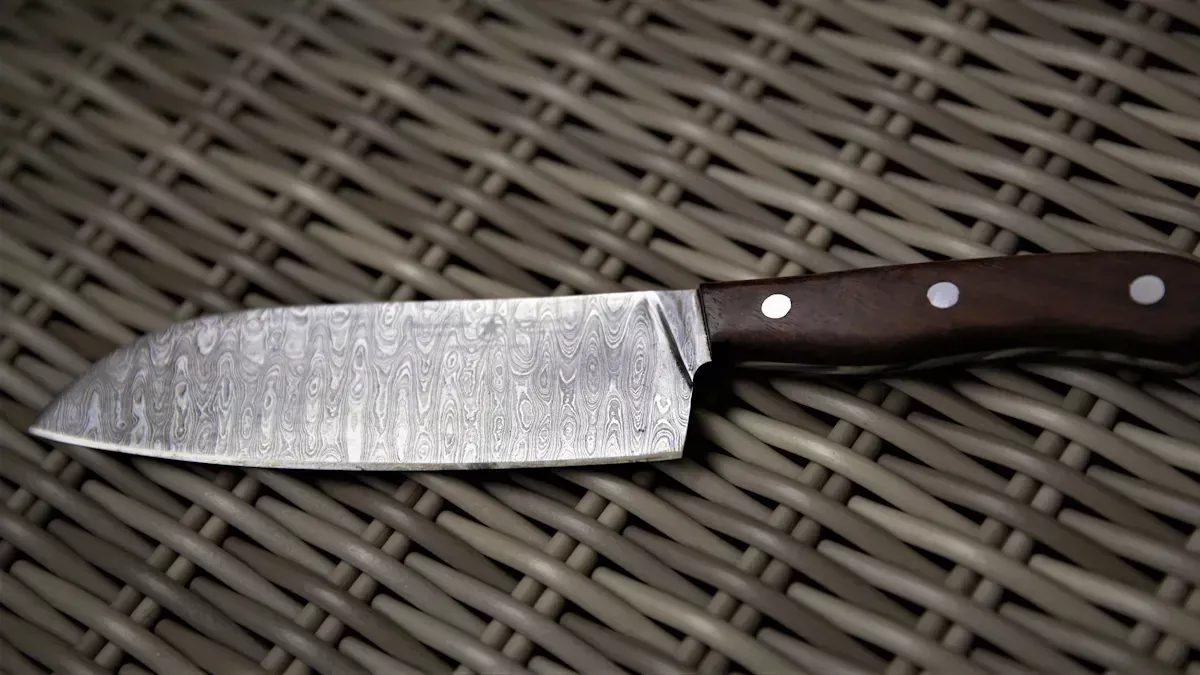
Construction and Features
When you pick up a forged knife, you hold a tool made from a single piece of high-quality steel. Makers heat the steel until it glows, then shape it with heavy machines or by hand. This process, called forging, changes the steel’s grain structure. You get a blade that is strong and dense. Most forged knives have a full-tang design, which means the steel runs through the handle. This gives you better balance and control. Many also include a bolster, the thick part between the blade and handle, which adds safety and stability.
Precision forging improves the knife’s mechanical properties and makes it more durable.
The forging process reduces material waste, making it more sustainable.
Forged knives resist corrosion better than many other types.
Pros of Forged Knives
A forged knife stands out for its strength. The forging process compresses the steel, making the blade tough and less likely to bend or break. You will notice that a forged knife keeps its sharp edge longer than most stamped knives. This means you spend less time sharpening and more time cooking. The full-tang and bolster give you a balanced feel in your hand, which helps with control and safety. Many chefs choose forged knives for these reasons.
The dense steel holds a razor-sharp edge for a long time.
You get better resistance to corrosion, which helps the knife last.
The balance and weight make it easier to cut with precision.
Cons of Forged Knives
You may find that a forged knife feels heavier than a stamped knife. This extra weight can tire your hand if you use it for a long time. Forged knives also cost more. On average, you pay 30-50% more for a forged knife than for a stamped one. If you are on a tight budget, this can be a big factor. Some people also find the thicker blade less flexible for certain tasks.
Tip: If you want a knife that lasts for years and gives you great control, a forged knife is a smart choice. If you prefer something lighter or more affordable, you might want to look at other options.
Stamped Knife Overview
Construction and Features
You see stamped knives in many kitchens because they are made with a fast and efficient process. Manufacturers start with flat sheets of stainless steel. They use heavy presses to cut out the blade shape. This method creates a thinner and lighter blade. Most stamped knives do not have a bolster, so you get more flexibility. You often find partial tangs, which means the steel does not run through the whole handle. The handle attaches with rivets or adhesives. The final step includes sharpening and inspection.
How stamped knives are made:
Sheet Selection: Makers choose flat sheets of stainless steel for quality and hardness.
Blade Shaping: Machines stamp out the blade shape from the sheet.
Heat Treatment: The blade gets hardened and tempered for strength.
Sharpening: The edge is formed and sharpened.
Handle Assembly: Handles attach, usually with rivets or glue.
Inspection: Each knife is checked and packaged.
Pros of Stamped Knives
You benefit from stamped knives in several ways. They are lightweight, so your hand feels less tired after long use. Many cooks prefer them for delicate tasks like slicing vegetables or filleting fish. Stamped knives cost less than forged knives, making them a smart choice for budget buyers or busy kitchens.
Stamped knives are affordable and help save money in high-volume kitchens.
Their light weight reduces fatigue for you and your staff.
Machine-made stamped knives can still offer high quality and good design.
Tip: If you want a knife that is easy to handle and fits your budget, a stamped knife is a great option.
Cons of Stamped Knives
You may notice that stamped knives do not last as long as forged knives. The blade can bend or lose its sharp edge faster. You need to sharpen them more often. The lack of a bolster and full tang means less balance and stability. Some users find them less comfortable for heavy-duty cutting.
Feature | Stamped Knives | Forged Knives |
Weight | Lighter and more flexible | Heavier and bulkier |
Edge Retention | Easier to sharpen, but loses edge faster | Holds edge longer |
User Experience | Good for delicate tasks, reduces fatigue | Feels more stable and personal |
Note: If you need a knife for tough jobs or want something that lasts for years, you may want to consider forged knives instead.
Forged vs Stamped: Key Differences
Weight and Balance
When you hold a knife, you can feel its weight. Forged knives are heavier because they are made thicker. This makes them feel steady in your hand. Stamped knives are much lighter and bend more easily. Some cooks like light knives because they move fast. Others think they are not as steady.
Here is a table that shows the main differences in weight and balance:
Knife Type | Weight Characteristics | Balance Characteristics |
Forged Knives | Generally heavier due to thicker construction | Well-balanced, often featuring a bolster |
Stamped Knives | Lighter and more flexible | Potentially less balanced, often feeling front-heavy |
In restaurants, balance is very important. A balanced knife lets you cut for a long time without hurting your wrist. Forged knives have a bolster and full tang. These parts help the knife stay balanced. Stamped knives can feel heavy at the front. This can make your hand tired if you use them a lot.
Knife Type | Balance Characteristics | Usage in Professional Settings |
Forged Knives | Superior balance due to heft and ergonomic design, reducing wrist strain during use. | Preferred for demanding tasks by professional chefs. |
Stamped Knives | Generally lighter and less balanced, which may lead to discomfort during prolonged use. | Less favored in high-demand environments. |
Tip: If you want a knife that feels steady and balanced, you might like a forged knife.
Durability and Edge Retention
Durability means how long your knife will last and how strong it is. A Forged Knife is made from one piece of metal. This makes it very strong and good for hard jobs. Stamped knives are not as strong. They can bend or break if you use them for tough work.
Knife Type | Durability | Lifespan |
Forged | Crafted from a single piece of metal, exceptionally durable, withstands heavy use | Longer lifespan, maintains performance over years |
Stamped | Generally less durable, prone to breaking or bending under heavy use | Shorter lifespan, less robust than forged knives |
Edge retention means how long the knife stays sharp. Forged knives keep their sharp edge for a long time. You do not need to sharpen them often. Stamped knives get dull faster. You will need to sharpen them more.
Knife Type | Edge Retention | Sharpening Frequency |
Forged Knives | Holds edge longer | Requires less frequent sharpening |
Stamped Knives | Dulls more quickly | Needs sharpening more often |
Note: If you want a knife that stays sharp and lasts many years, a Forged Knife is a good pick.
Price and Value
Price is important when you buy a knife. Forged knives cost more because they are harder to make. Stamped knives are cheaper, so they are better if you do not want to spend a lot. Some brands sell both types at different prices.
Brand | Type | Price Range |
Henckels | Stamped | $100 - $240 |
Chicago Cutlery | Forged | Just over $100 |
Victorinox | Stamped | $100 - $595.99 |
A stamped knife can be a good deal if you do not need it to last forever. If you want a knife that will last many years, a Forged Knife is worth the extra money.
Tip: Think about how much you cook and what you need before you choose how much to spend.
Maintenance
Taking care of your knife helps it work well. Forged knives, especially Damascus steel ones, need sharpening often. Chefs in busy kitchens sharpen them every week. This keeps the knife sharp and safe. Stamped knives get dull faster, so you need to sharpen them even more.
Sharpen forged knives often, sometimes every week in busy kitchens.
Stamped knives need sharpening more because they get dull fast.
If you take care of a forged knife, it will last longer and stay sharp.
Stamped knives may not last as long, even if you care for them.
Note: Always wash your knives by hand and dry them right away. This helps both types last longer.
Choosing the Right Knife
For Home Cooks
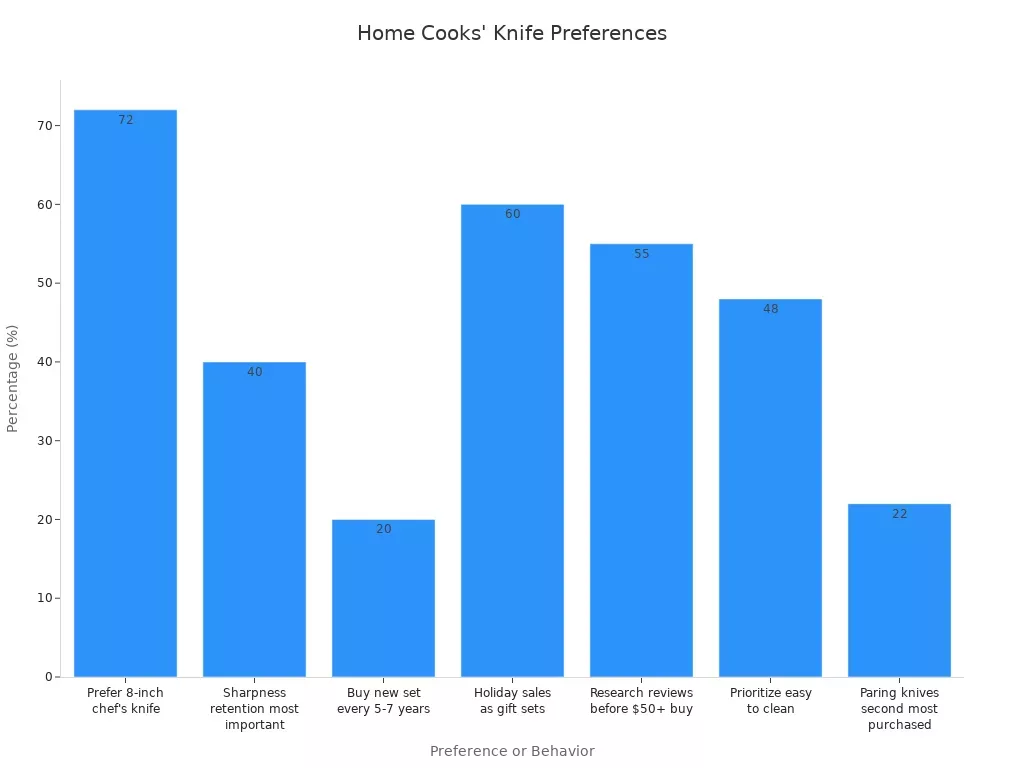
You want a knife that helps you cook every day. Most people at home use an 8-inch chef’s knife. About 40% of buyers care about how long the knife stays sharp. Almost half of home cooks want a knife that is easy to clean. Many people buy a new set of knives every five to seven years. A lot of shoppers read reviews before they spend more than $50.
Factor | Forged Knives | Stamped Knives |
Weight and Balance | Heavier, feels balanced | Lighter, easier to handle |
Kitchen Needs | Strong and durable for heavy tasks | Flexible, easier to sharpen for light tasks |
Cost | More expensive due to craftsmanship | More affordable, mass-produced |
Tip: Pick a knife that feels good in your hand and fits how you like to cook.
For Professional Chefs
You work in a busy kitchen and need tools you can trust. Forged knives give you balance, strength, and accuracy. Chefs use them for big jobs. Stamped knives are lighter and easy to replace if needed. Line cooks often choose stamped knives because they are fast to use.
Knife Type | Characteristics | Preference |
Forged | Balance, durability, precision | Preferred by professional chefs for heavy-duty tasks |
Stamped | Affordability, lightness, ease of use | Appreciated by home cooks for general use |
Note: If you want the best chef knife performance and tools that last, forged knives are great for pro kitchens.
For Budget Buyers
You want a good knife but do not want to spend a lot. Stamped knives cost less and work well for most jobs. Some brands, like Victorinox Fibrox, give you a lot for your money. Forged knives start at $130 and can be even more. Stamped knives can cost between $30 and $150.
Knife Type | Model | Price Range |
Best Value Forged | Wüsthof Classic | $150-200 |
| Zwilling Pro | $140-180 |
| Messermeister Meridian Elite | $130-170 |
Best Value Stamped | Victorinox Fibrox | $40-60 |
| Mercer Culinary Genesis | $35-55 |
| Tojiro DP | $60-80 |
Tip: You can get a stamped knife that works well and saves you money.
For Specific Tasks
You need different knives for different jobs. Forged knives are good for chopping and everyday cooking. Stamped knives are better for slicing and filleting because they are thin and bend easily.
Knife Type | Characteristics | Best Suited For |
Forged Knives | Heavy, bulky, precise, durable | Chopping, general use |
Stamped Knives | Thinner, lighter, flexible, easier to sharpen | Slicing, filleting |
Note: Use a forged knife for hard jobs and a stamped knife for careful, light cutting.
You now know that forged knives are strong and last long. Stamped knives are lighter and cost less money. Think about how you cook, your budget, and what feels good in your hand when picking a knife.
Knife Type | Best For | Key Feature |
Forged Knife | Hard kitchen work | Strong and tough |
Stamped Knife | Daily slicing | Light and bends |
Tip: Try holding different knives before you buy one. Choose the knife that feels best to you.
FAQ
What is the main difference between forged and stamped knives?
Forged knives come from a single piece of steel. Stamped knives are cut from a flat sheet. You get more strength and balance with forged knives. Stamped knives feel lighter and cost less.
Do forged knives stay sharp longer than stamped knives?
Yes, forged knives hold their edge longer. You will spend less time sharpening them. Stamped knives lose sharpness faster, so you need to sharpen them more often.
Are stamped knives good for beginners?
You can start with a stamped knife. It feels light and easy to handle. Many beginners like stamped knives for simple kitchen tasks.
How do I know which knife is right for me?
Think about your cooking style.
Try holding both types in your hand.
Choose the knife that feels comfortable and fits your budget.