Introduction
A perfectly cooked steak deserves more than a dull table knife. The right steak knives can turn every bite into a clean, juicy slice instead of a shredded mess. For home cooks and chefs, a good steak knife is not a luxury; it is a tool that protects flavor, texture, and presentation.
In this guide, we’ll explore what makes the best steak knife. You’ll learn about blade design, materials, balance, and key features to consider. By the end, you’ll know exactly what to look for when choosing the best steak knives for your kitchen or dining experience.
Understanding What Makes a Great Steak Knife
The True Role of a Steak Knife
A steak knife isn’t just a sharp table knife. It is a specialized tool designed to easily cut through steak without crushing or tearing the meat. Its sharp edge allows for precision and smooth cuts, ensuring the steak remains intact without losing its juices. A good steak knife will glide through the meat with minimal force, preserving the texture and moisture of each bite. In contrast, a poor-quality knife may require excessive effort, leading to uneven cuts, broken meat fibers, and a loss of flavor.
Key Design Features
The ideal steak knife has a blade length of around 4-5 inches. This size allows for enough reach without feeling awkward or cumbersome when cutting. The blade should be thin enough to ensure clean cuts but sturdy enough for durability. Additionally, the tip of the knife should be fine enough to make the initial cut with ease while maintaining strength to resist bending or breaking.
The handle of a steak knife is equally important. It should fit comfortably in your hand and provide a secure grip. A poorly designed handle can cause slippage, especially when your hands are greasy or wet. For a comfortable experience, the handle should feature ergonomic contours that naturally follow the shape of your hand. The weight balance of the knife should be even between the handle and blade, ensuring ease of use and preventing hand fatigue during extended cutting sessions.
Serrated vs Non-Serrated: Which One is Right for You?
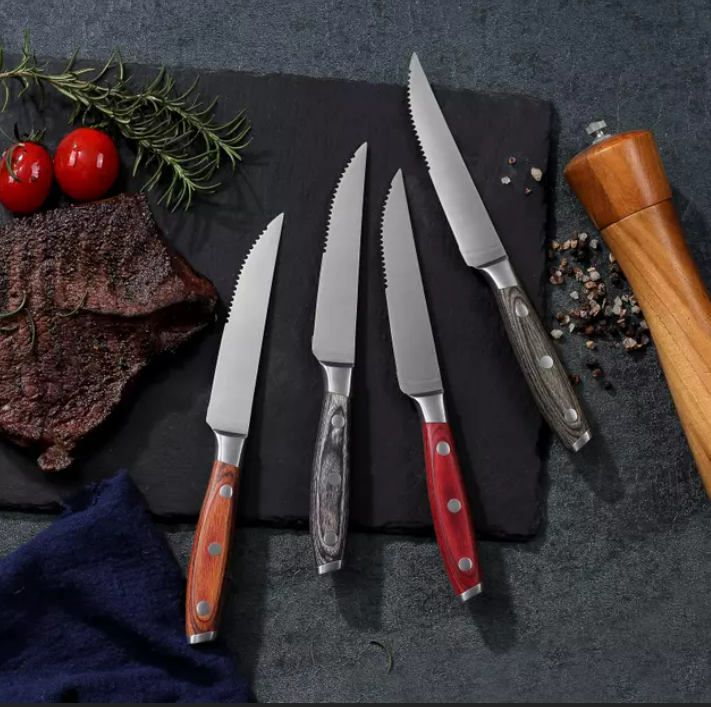
The choice between serrated and non-serrated steak knives often comes down to personal preference. Serrated steak knives feature teeth that make them ideal for cutting through tougher exteriors, such as grilled or crusted meat. The teeth of the blade grip and slice through the surface with a sawing motion. These knives are often preferred for their ability to stay sharp longer since the teeth can avoid direct contact with the plate and cutting board, making them more resistant to wear.
On the other hand, non-serrated steak knives provide a smooth, clean cutting experience. The lack of serrations results in fewer instances of tearing the meat, which is particularly beneficial when dealing with more tender cuts of steak. Non-serrated knives also require more maintenance because their edges dull more quickly, but they are easier to sharpen, making them a better long-term investment for those willing to maintain their blades.
Types of Steak Knives and Their Unique Advantages
Serrated Steak Knives
Serrated steak knives excel when dealing with tougher cuts of meat, particularly those with a thick crust or grilled exterior. The teeth on the blade help break through the tougher outer layers without requiring excessive force. They also perform well when cutting through meat that has a more fibrous texture, such as roasts. Serrated steak knives tend to stay sharp longer because the edges are less prone to direct contact with surfaces that could dull them.
Non-Serrated Steak Knives
Non-serrated steak knives offer a smoother, cleaner cut, particularly beneficial when working with delicate cuts of meat like filet mignon or prime rib. A smooth edge ensures the meat’s surface remains intact and preserves the juices within, contributing to a more refined dining experience. These knives are easier to sharpen at home with basic tools such as a honing rod or sharpening stone, making them a more convenient option for those who enjoy keeping their knives in top condition.
Japanese vs Western Steak Knives
Japanese steak knives are known for their exceptional sharpness and precision. They are typically made from harder steel and feature a thinner, more acute blade angle, making them ideal for clean, smooth cuts. These knives are often crafted using traditional techniques, resulting in beautiful patterns on the blade. However, they may be more fragile than Western knives and are prone to chipping if not handled with care.
Western steak knives, on the other hand, are generally thicker and more robust. They are designed for durability and comfort, making them ideal for everyday use. Their blades are typically less sharp than Japanese knives but are more forgiving when it comes to handling and maintenance. Western-style knives also tend to have heavier handles and more pronounced bolsters, providing a solid feel and better control.
Folding vs Fixed Steak Knives
Folding steak knives offer portability and convenience, especially for those who enjoy outdoor dining or camping. These knives fold into a compact form, making them easy to carry and store. However, they often come with a trade-off in terms of durability and comfort, as the folding mechanism can sometimes interfere with the balance of the knife.
Fixed steak knives are more traditional and provide a more stable, durable option. They are typically preferred for formal dining and offer a more comfortable grip and a stronger blade, which can handle a variety of meat types with ease.
Blade Materials and Edge Quality
Stainless Steel: The Standard Choice
Stainless steel is the most common material for steak knives. It is corrosion-resistant, durable, and relatively easy to maintain. Stainless steel blades are often hardened to increase sharpness and edge retention. For many households and restaurants, high-quality stainless steel strikes the perfect balance between performance and ease of care.
High-Carbon Steel: Sharpness and Strength
High-carbon steel blades offer superior sharpness and edge retention. These blades are harder than stainless steel, allowing them to maintain a sharp edge for longer periods. However, high-carbon steel is prone to rust and staining if not properly maintained. Those who opt for high-carbon steel must be diligent about cleaning and drying their knives immediately after use.
Damascus Steel: The Luxury Option
Damascus steel blades are made by layering different types of steel to create a pattern on the blade. These knives are not only aesthetically pleasing but also incredibly strong and durable. Damascus steel knives are prized by collectors and professional chefs alike for their ability to hold a sharp edge and resist chipping. However, the intricate manufacturing process makes them a more expensive option.
Ceramic Blades: Sharp Yet Fragile
Ceramic blades are incredibly sharp and lightweight. They can maintain a sharp edge for a long time without requiring frequent sharpening. However, ceramic blades are fragile and prone to chipping or breaking when used improperly. Ceramic steak knives are best suited for those who prefer light use and are careful with their knives.
Blade Material | Advantages | Disadvantages |
Stainless Steel | Durable, corrosion-resistant, easy to maintain | Less sharp retention compared to high-carbon steel |
High-Carbon Steel | Longer edge retention, sharper | Prone to rust, requires more care |
Damascus Steel | Beautiful patterns, strong, tough | Expensive, requires specialized maintenance |
Ceramic Blades | Extremely sharp, lightweight, rust-free | Chips easily, requires special sharpening tools |
Handle Materials and Ergonomic Design
Wood Handles
Wooden handles are traditional and offer a natural, comfortable grip. They are visually appealing and can enhance the overall dining experience. However, wood handles require more maintenance to avoid moisture damage, which can cause them to crack or swell.
Composite Handles
Composite materials like Micarta and G10 offer a modern alternative to wood. These materials are durable, moisture-resistant, and provide excellent grip, making them perfect for daily use. They are also easier to clean and maintain compared to wood handles.
Metal Handles
Metal handles, such as those made from stainless steel or titanium, are sleek and durable. These handles are easy to clean and often provide a more modern, minimalist look. However, they can be slippery if not textured properly, and they may not offer the same level of comfort as wood or composite handles.
Finding the Right Grip
The handle of a steak knife should feel comfortable and secure in your hand. The grip should be ergonomic, fitting the contours of your fingers to ensure stability and precision. The handle material should also be durable enough to withstand regular use and cleaning.
Top Factors to Consider When Choosing the Best Steak Knives
Sharpness and Edge Retention
A sharp steak knife will glide through meat with ease, creating clean cuts without tearing the fibers. Edge retention is equally important, as it ensures the knife maintains its sharpness over time. High-quality steel and proper heat treatment can extend the life of the blade, reducing the frequency of sharpening.
Blade Length and Thickness
For optimal control and comfort, steak knife blades should typically be between 4 and 5 inches long. This length is ideal for cutting through most cuts of meat without feeling clumsy. Blade thickness should also be considered—too thick and the knife may feel cumbersome; too thin, and the knife may lack the strength needed for tougher cuts.
Tang Construction
A full tang extends the blade through the entire length of the handle, providing better stability and durability. Knives with a full tang are generally stronger and less likely to break under stress compared to those with a partial tang. A full tang construction is often a sign of high-quality craftsmanship.
Ease of Maintenance
Steak knives that require minimal maintenance are ideal for most households. While some knives may claim to be dishwasher safe, hand washing is always the best practice to maintain the blade’s sharpness and prevent damage to the handle. Regular honing and occasional sharpening will keep your steak knives in top condition for years to come.
Blade Length (inches) | Ideal For | Pros | Cons |
4 - 5 inches | Standard dining, home use | Easy to handle, great for control | Limited reach for larger cuts |
5 - 7 inches | Formal dining, larger cuts of meat | More impressive on the table | May feel clumsy in casual settings |
Best Steak Knife Recommendations and Comparisons
Best Overall Steak Knives
Look for steak knives that balance sharpness, comfort, and durability. The best knives will perform well across a variety of meats and will last for years, maintaining their sharpness and overall performance.
Best Value Steak Knives
Affordable yet durable, these knives offer excellent cutting performance without the high price tag. They provide the best bang for your buck, making them ideal for everyday use.
Best Folding Steak Knife
Portable and versatile, folding steak knives are perfect for outdoor enthusiasts and those who enjoy dining on the go. These knives are compact and easy to carry, making them a great addition to any travel or camping kit.
Best High-End Pick
Premium steak knives feature luxurious materials like Damascus steel and beautifully crafted handles, making them perfect for special occasions. These knives provide a top-tier cutting experience and are a great investment for those who enjoy fine dining.
Best Hybrid Grill & Steak Knife
These knives are designed for both grilling and dining, offering versatility and durability for outdoor cooking. They combine the features of a carving knife and a steak knife, making them ideal for BBQ enthusiasts.
Serrated vs Non-Serrated Steak Knives: Which Is Better?
Cutting Performance Comparison
Serrated knives excel at cutting through tough exteriors, while non-serrated knives provide cleaner, more precise cuts. Each style has its advantages, depending on the type of meat and personal preference.
Maintenance and Sharpening Differences
Non-serrated knives are easier to maintain and sharpen, while serrated knives require more specialized care. The choice ultimately depends on your willingness to maintain the knives.
Dining Experience
Non-serrated knives provide a smoother, quieter cutting experience, which can enhance the overall dining experience. The clean cuts also improve the appearance of the meat.
Which Type Suits You?
Consider your usage frequency and personal preferences when deciding between serrated and non-serrated steak knives. Both options have their benefits, but non-serrated knives are often preferred for fine dining and precision.
Feature | Serrated Steak Knives | Non-Serrated Steak Knives |
Cutting Performance | Great for tougher exteriors, like crusty meat | Clean cuts, preserves texture |
Maintenance | Difficult to sharpen, requires special tools | Easy to sharpen, regular maintenance needed |
Edge Retention | Stays sharp longer without maintenance | Needs regular sharpening |
Dining Experience | Can tear meat, leaving jagged edges | Smooth, quiet cuts, ideal for fine dining |
Best Use | Ideal for outdoor dining or casual meals | Best for precise, controlled cutting in formal settings |
Conclusion
The best steak knife combines sharpness, comfort, and durability. By considering factors such as blade design, materials, and maintenance, you can make an informed decision when selecting the perfect knife. A quality steak knife elevates your dining experience and ensures that each slice of meat is as enjoyable as the dish itself. Garwin offers premium steak knives crafted for precision and performance, allowing you to enjoy every meal to the fullest.
FAQ
Q: What makes a steak knife the best?
A: The best steak knives combine sharpness, comfort, and durability, with high-quality steel and a well-balanced handle for easy use.
Q: What is the difference between serrated and non-serrated steak knives?
A: Serrated steak knives are great for tougher meat exteriors, while non-serrated knives offer cleaner cuts and are easier to sharpen.
Q: How do I choose the right steak knife?
A: Consider blade length, material, and handle comfort when selecting steak knives. A good steak knife should fit well in your hand and cut through meat smoothly.
Q: Are expensive steak knives worth it?
A: Yes, higher-end steak knives offer better performance, sharper edges, and longer durability, making them a good investment for frequent use.
Q: Can I use regular knives for steak?
A: While regular knives can cut steak, steak knives are designed to cut meat more efficiently without tearing or damaging its texture.