Choosing the right knife can make or break your steak experience. Have you ever struggled with a dull knife at dinner?
In this article, we’ll explore what makes the best steak knife. You’ll learn about key features, types, and care tips to enhance your dining experience.
Understanding Steak Knives
What Makes a Steak Knife Special?
A steak knife is designed specifically for cutting through meat, particularly steak. Unlike other kitchen knives, such as chef's knives or utility knives, steak knives have unique features tailored for this task. Their primary purpose is to provide a clean and effortless slicing experience, enhancing the overall enjoyment of your meal.
Knife Type | Purpose | Design Features |
Steak Knife | Cutting meat, especially steak | Sharp, serrated or straight edge, ergonomic handle |
Chef's Knife | General food preparation | Versatile blade for chopping and slicing |
Utility Knife | Various cutting tasks | Mid-sized blade, good for smaller jobs |
Key Features of the Best Steak Knife
When selecting the best steak knife, several key features come into play. First and foremost is sharpness. A sharp blade allows for effortless slicing through even the toughest cuts of meat. This means less tearing and more clean cuts, preserving the meat's juices and texture.
Durability is another crucial aspect. The best steak knives are made from high-quality materials that resist wear and tear. For instance, high-carbon stainless steel is often preferred for its balance of sharpness and corrosion resistance. This material ensures that your knife remains effective over time, even with regular use.
Comfort cannot be overlooked, either. Ergonomic designs are essential for reducing hand fatigue during meals. A well-designed handle fits comfortably in your hand, allowing for a secure grip. This is particularly important during extended dining experiences, where comfort can significantly impact enjoyment.
In summary, when looking for the best steak knife, focus on sharpness, durability, and comfort. Each of these features plays a vital role in enhancing your steak-eating experience.
Types of Steak Knives
Straight Edge vs. Serrated Edge
When choosing a steak knife, one of the first decisions is between a straight edge and a serrated edge. Each type has its own strengths and weaknesses, which can greatly affect your dining experience.
Straight Edge Knives are known for their clean, smooth cuts. They excel at slicing through tender cuts of meat, preserving the integrity of the fibers. However, they require regular sharpening to maintain their effectiveness. Over time, they may dull quickly if used on hard surfaces, such as plates.
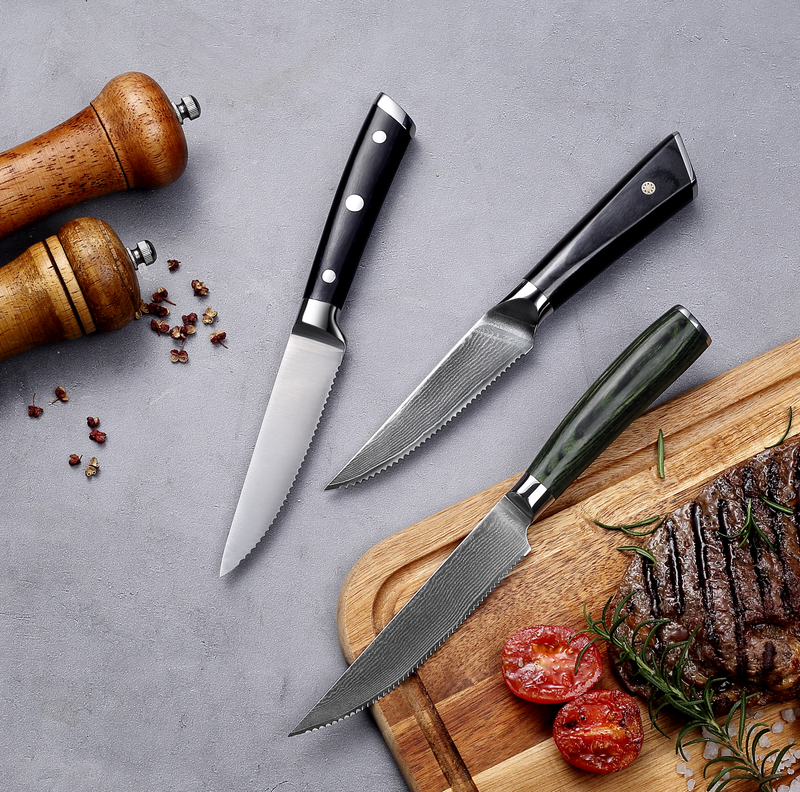
Serrated Edge Knives, on the other hand, feature teeth along the blade. This design allows them to grip and slice through tougher meats more easily. They tend to stay sharp longer because only the tips of the teeth make contact with the cutting surface. However, they can tear the meat fibers, leading to less aesthetically pleasing cuts.
Knife Type | Pros | Cons |
Straight Edge | Clean cuts, easy to sharpen | Dulls quickly, requires maintenance |
Serrated Edge | Stays sharp longer, good for tough cuts | Can tear meat, harder to sharpen |
Blade Materials
The material of the blade plays a significant role in the performance and durability of steak knives. High-carbon stainless steel is often regarded as the best choice. It combines the sharpness and edge retention of high-carbon steel with the corrosion resistance of stainless steel. This makes it an excellent option for frequent use.
In contrast, standard stainless steel is highly resistant to rust and stains but may not hold an edge as well as high-carbon variants. When it comes to knife construction, we have two main types: forged and stamped. Forged knives are made from a single piece of steel, providing better balance and durability. Stamped knives are cut from a sheet of steel, which can make them lighter but may sacrifice some strength.
Blade Material | Description | Benefits |
High-Carbon Stainless Steel | Sharp, durable, and corrosion-resistant | Best for longevity and performance |
Standard Stainless Steel | Rust-resistant but may dull faster | Low maintenance |
Forged Knives | Made from a single piece of steel | Stronger and better balanced |
Stamped Knives | Cut from a steel sheet | Lighter but may lack durability |
Handle Materials and Design
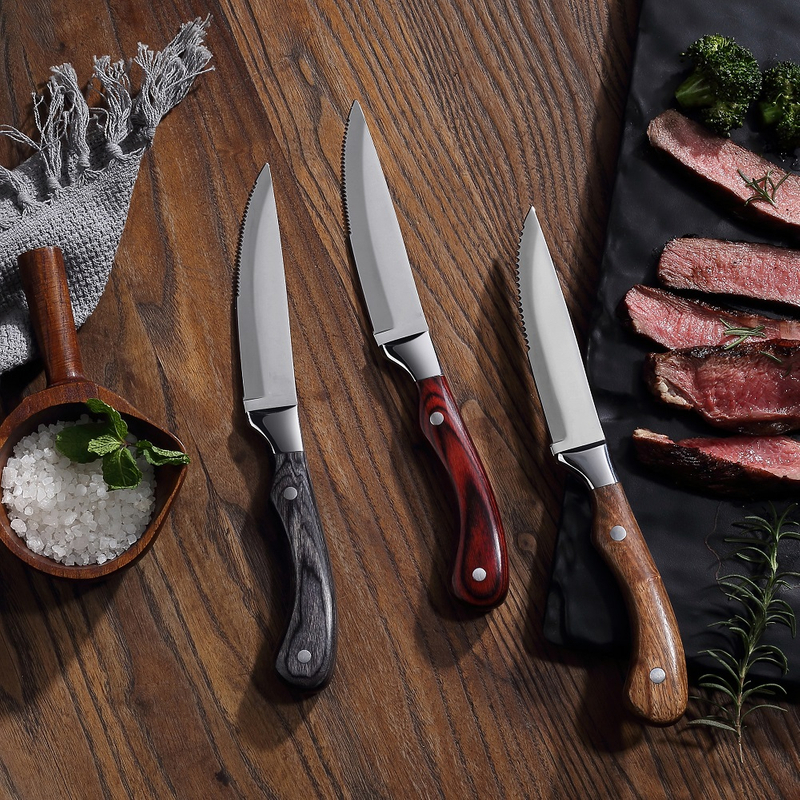
The handle of a steak knife is just as important as the blade itself. A comfortable handle provides a secure grip, allowing for precise control while cutting. Common materials include wood, composite resins, and Micarta. Each material has its unique feel and aesthetic appeal.
Wood handles offer a classic look and can provide a warm, comfortable grip. However, they may require more maintenance to prevent damage from moisture. Composite resins are durable and often resistant to stains and odors. Micarta, made from layers of paper or fabric, is known for its strength and unique textures.
The design of the handle also impacts comfort and safety. A full tang, where the blade extends through the handle, provides better balance and reduces the risk of breakage. Various handle designs cater to different preferences, enhancing the overall cutting experience.
Specific Handle Options
● Pakka Wood Handles: These handles offer a premium texture and excellent grip, making them a popular choice for high-end steak knives.
● Wood Grain Handles: Combining natural aesthetics with ergonomic design, these handles are both beautiful and functional.
● Ergonomic Handles: Designed to fit the contour of the hand, these handles reduce fatigue during extended use, ensuring a comfortable dining experience.
In conclusion, understanding the types of steak knives available helps you make an informed choice. Whether you prefer the clean cuts of a straight edge or the durability of a serrated knife, knowing about blade materials and handle designs will enhance your steak-eating experience.
Features to Consider When Choosing the Best Steak Knife
Sharpness and Edge Retention
When it comes to steak knives, sharpness is crucial. A sharp blade allows for clean cuts through various types of meat, from tender filet mignon to tougher cuts like ribeye. Without sharpness, you might end up tearing the meat rather than slicing it, which can ruin the dining experience.
To maintain sharpness, regular upkeep is essential. Using a honing steel before each use can help realign the blade's edge. Additionally, sharpening your knife every few months, depending on usage, ensures it remains effective. The right sharpening tools, such as whetstones or electric sharpeners, can make this process easier.
Maintenance Task | Frequency | Recommended Tool |
Honing | Before each use | Honing steel |
Sharpening | Every 3-6 months | Whetstone or electric sharpener |
Comfort and Ergonomics
Comfort is another vital feature to consider. Ergonomically designed handles reduce hand fatigue, especially during longer meals. A good grip allows for better control, making each cut smoother and more precise.
Most experts recommend a blade length of 4 to 5 inches for optimal control. This size strikes a balance between maneuverability and cutting power, allowing you to handle various steak sizes effectively. A well-balanced knife feels natural in your hand, enhancing your overall dining experience.
Aesthetic Appeal
While functionality is key, the aesthetic appeal of a steak knife shouldn't be overlooked. A beautifully designed knife can elevate the dining atmosphere, making meals feel more special. The right knife complements your table setting and adds a touch of elegance.
Design elements, such as the finish of the blade and the style of the handle, contribute to the overall look. For instance, polished stainless steel blades catch the light beautifully, while wood handles provide a warm, inviting feel. Choosing a knife that aligns with your personal style can enhance not only your dining experience but also impress your guests.
Design Element | Impact on Dining Experience |
Blade Finish | Reflects light, adds elegance |
Handle Style | Provides comfort and aesthetic appeal |
Incorporating these features into your selection process will help you find the best steak knife for your needs. Whether you prioritize sharpness, comfort, or aesthetics, understanding these aspects will lead to a more enjoyable steak-eating experience.
Top Recommendations for the Best Steak Knives
High-End Forged Steak Knives
If you're looking for the best steak knife, high-end forged options are a fantastic choice. These knives are crafted from a single piece of high-carbon stainless steel, which enhances durability and performance. They not only offer exceptional sharpness but also provide a balanced feel in your hand.
One standout brand in this category is Garwin, known for its premium steak knife sets. Garwin knives feature ergonomic handles and stunning designs that elevate any dining experience. Additionally, they offer customization options, allowing you to create unique gifts or match your dining aesthetics perfectly. Imagine gifting a beautifully engraved knife set to a loved one—it's a thoughtful gesture that combines practicality with elegance.
Brand | Features | Customization Options |
Garwin | High-carbon stainless steel, ergonomic design | Engraving, handle material choices |
Wüsthof | Precision-forged, full tang | Personalized gift sets |
Shun | VG-MAX steel, beautiful Damascus patterns | Custom handle finishes |
Budget-Friendly Steak Knives
Not everyone wants to spend a fortune on steak knives, and that's perfectly fine. There are plenty of budget-friendly options that don’t compromise on quality. When searching for affordable steak knives, look for features like stainless steel blades, comfortable handles, and good reviews regarding sharpness and durability.
Some excellent budget options include brands like Victorinox and Chicago Cutlery. These knives often use high-quality materials while remaining accessible. Key features to focus on include a solid grip, a sharp blade, and a design that feels good in your hand. This way, you can enjoy delicious steaks without breaking the bank.
Brand | Price Range | Key Features |
Victorinox | $30 - $50 | Lightweight, comfortable grip |
Chicago Cutlery | $25 - $40 | Sturdy construction, sharp blades |
Cuisinart | $20 - $35 | Affordable, easy to maintain |
Customization Options
Customization can add a personal touch to steak knives, making them perfect for gifts or special occasions. Custom steak knives can be tailored to reflect personal styles or commemorate significant events. Many companies offer services that allow you to choose everything from the handle material to engraved names or dates.
For instance, some brands provide the option to select unique handle finishes, such as wood or composite materials, that suit the recipient's taste. Customization not only enhances the aesthetic appeal but also creates a memorable dining experience. Services like Etsy and specialty kitchenware stores often feature artisans who can craft personalized knife sets.
Customization Service | Benefits | Examples |
Engraving | Personalizes the knife, adds sentimental value | Names, dates, or special messages |
Material Selection | Tailors the knife to personal preferences | Wood, resin, or metal choices |
Design Consultation | Helps create a unique, cohesive look | Professional design assistance |
With these options in mind, you can find the best steak knife that meets your needs, whether you prefer high-end quality, budget-friendly choices, or personalized designs. Enjoy your steak dinners with the perfect knife in hand!
Maintenance and Care for Your Steak Knife
Proper Cleaning Techniques
Keeping your steak knife clean is essential for maintaining its performance and longevity. After each use, wash the knife by hand with warm, soapy water. Avoid putting it in the dishwasher, as harsh detergents and high temperatures can damage the blade and handle. Instead, gently scrub it with a soft sponge, paying attention to any food particles stuck around the blade or handle.
After washing, dry your knife immediately with a soft cloth. This prevents moisture buildup, which can lead to rust or corrosion. One common mistake is leaving the knife wet or soaking it in water, which can weaken the handle and dull the blade over time.
Cleaning Step | Best Practice | Common Mistake |
Washing | Hand wash with warm, soapy water | Using a dishwasher |
Drying | Wipe immediately with a soft cloth | Leaving it wet or soaking |
Sharpening Your Steak Knife
To ensure your steak knife remains effective, regular sharpening is crucial. A sharp knife not only cuts better but also enhances safety by reducing the risk of slips. There are several methods for sharpening, each with its own advantages.
Whetstones are popular among enthusiasts for their ability to provide a precise edge. They require some skill but can yield excellent results. Alternatively, a honing rod is a great tool for maintaining the edge between sharpenings. It realigns the blade’s edge but does not remove material like a whetstone does.
Sharpening Method | Description | Frequency |
Whetstone | Provides a precise edge; requires skill | Every few months, depending on use |
Honing Rod | Realigns the blade; easy to use | Before each use |
As a general rule, you should sharpen your steak knife every three to six months, depending on how often you use it. If you notice it struggling to cut through meat smoothly, it’s time for a touch-up. Regular maintenance will keep your knife in top condition, ensuring it serves you well for years to come.
By following these cleaning and sharpening tips, you can maintain your steak knife effectively. This not only prolongs its lifespan but also enhances your dining experience, making every steak meal a pleasure.
FAQ
Q: What is the best material for a steak knife?
A: The best material for a steak knife is high-carbon stainless steel, as it offers sharpness, durability, and corrosion resistance.
Q: How often should I sharpen my steak knife?
A: You should sharpen your steak knife every three to six months, depending on usage, to maintain its cutting performance.
Q: Can I use a steak knife for other types of meat?
A: Yes, steak knives can be used for other meats, but they are specifically designed for cutting steak efficiently.
Q: What is the ideal length for a steak knife blade?
A: The ideal blade length for a steak knife is typically between 4 to 5 inches for optimal control and precision.
Q: Are serrated knives better for cutting steak?
A: Serrated knives are excellent for cutting through tougher meats, while straight-edge knives provide cleaner cuts for tender steaks.
Conclusion
Choosing the best steak knife involves understanding key features like sharpness, comfort, and materials. High-end forged knives offer durability, while budget-friendly options still provide quality. Customization can add a personal touch to your knife set.
Investing in a quality steak knife enhances your dining experience. With the right knife, every meal can be a delight. Take the time to select a knife that meets your needs and enjoy perfectly sliced steaks every time.