Introduction
Have you ever noticed your steak knives tearing meat instead of slicing it? Even serrated blades dull over time. In this guide, you’ll learn how to sharpen a serrated steak knife, what tools to use, and simple ways to keep it cutting smoothly for years.
Understanding Serrated Steak Knives
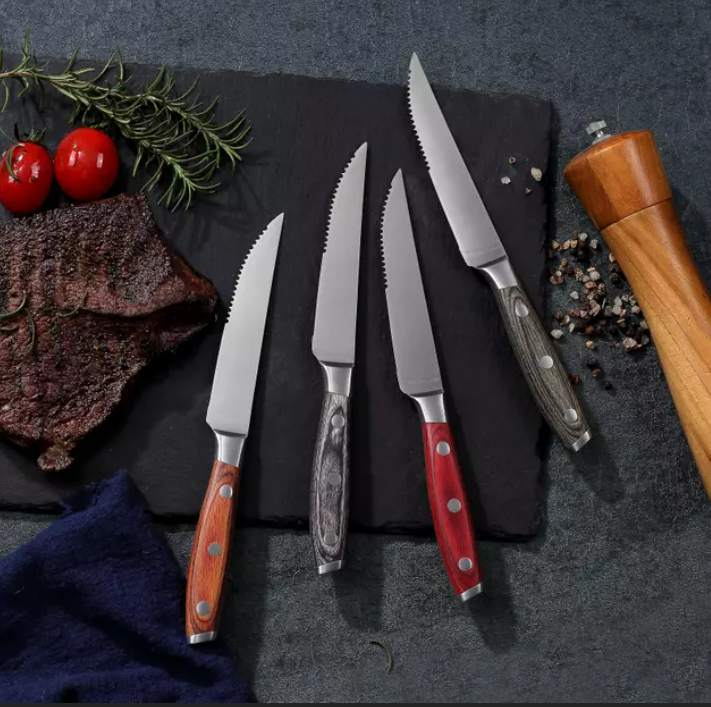
Serrated steak knives are not like ordinary kitchen knives. Their blades have saw-like teeth designed to slice through tough exteriors and tender interiors, such as seared steak or crusty bread, without crushing them. Each serration acts like a tiny cutting edge, allowing the knife to grip and cut efficiently. This unique design means the knife slices rather than presses, preserving the texture and juiciness of the meat.
Serrated blades also stay sharp longer because only the raised points touch the cutting surface. The recessed edges avoid direct contact with cutting boards, which slows dulling. However, over time, even these points wear down. When your steak knife begins tearing meat instead of slicing cleanly or leaves ragged edges, it’s time for sharpening. You might also notice increased resistance when cutting or an uneven feel during slicing—both signs that your knife is losing its precision.
Tools You’ll Need to Sharpen Serrated Steak Knives
To sharpen a serrated steak knife properly, the right tools are essential. The most important is a tapered ceramic or diamond sharpening rod. This tool fits neatly into each serration, allowing you to restore sharpness without damaging the blade’s shape. A ceramic rod provides gentle abrasion, while a diamond rod removes metal faster and is ideal for more worn edges.
Other useful tools include a whetstone for polishing the flat side of the blade, honing steel for regular maintenance, and a leather strop to remove burrs and give the edge a final polish. Before you begin sharpening, prepare a safe, stable workspace. Lay down a towel or rubber mat, and keep your tools organized. A secure grip and steady environment reduce the risk of slips or uneven sharpening.
Tool | Material | Function | Recommended Use |
Tapered Sharpening Rod | Ceramic / Diamond | Sharpens each serration | Best for home sharpening |
Whetstone | Fine-grit stone | Smooths flat side | Removes burrs |
Honing Steel | Steel or ceramic | Realigns edge | Between sharpening sessions |
Leather Strop | Leather | Polishes final edge | For professional finish |
Step-by-Step Guide: How to Sharpen a Serrated Steak Knife
Sharpening serrated knives takes patience, but the process is simple once you understand the technique.
Step 1: Identify the Beveled Edge
Examine your steak knife closely. One side will have a visible angle or bevel—that’s the side you’ll sharpen. The opposite side is usually flat. Hold the knife under a light to spot the beveled side; it catches the light more clearly.
Step 2: Match the Rod to Each Serration
Place the tapered sharpening rod into the first gullet (the curved groove between teeth). Push the rod gently back and forth four to five times, following the serration’s natural curve. Keep your strokes consistent and light—avoid pressing too hard, as this can deform the serration.
Step 3: Remove Burrs on the Flat Side
After sharpening all serrations, check the flat side of the knife. You’ll see or feel tiny burrs—small metal fragments that appear during sharpening. Lay the knife flat on a fine-grit whetstone and make two to three gentle passes to remove them. This step refines the edge and restores smoothness.
Step 4: Clean and Test the Blade
Wash the knife with warm, soapy water and dry it thoroughly. Test its sharpness by slicing a tomato or a piece of steak. A properly sharpened knife should glide smoothly, leaving clean cuts without tearing or crushing the food.
Step 5: Repeat as Needed
For home cooks, sharpening once or twice a year is usually enough. In professional kitchens, check your knives quarterly. Regular honing can extend the time between full sharpenings.
Common Mistakes to Avoid When Sharpening Steak Knives
The most frequent mistake is over-sharpening. Grinding too aggressively removes too much metal and shortens the knife’s lifespan. Another common error is inconsistent angles—changing the sharpening angle alters the serration’s shape, leading to uneven cuts. Using electric sharpeners on serrated blades is also risky; these machines are designed for straight edges and can ruin the serrations entirely.
Skipping regular honing is another issue. Honing doesn’t remove metal—it simply realigns the microscopic edge, keeping the knife effective between sharpenings. Think of it as maintenance, not repair.
Mistake | Description | Solution |
Over-sharpening | Removes too much metal | Use light, consistent strokes |
Inconsistent Angle | Uneven serrations | Keep rod aligned with each gullet |
Using Electric Sharpeners | Damages serrations | Stick to manual sharpening tools |
Skipping Honing | Edge dulls quickly | Hone regularly between sharpening |
Caring for Your Sharpened Steak Knives
Proper care ensures your knives stay sharp longer. After sharpening, always clean the blade with warm water and mild soap. Avoid dishwashers—the heat and detergent can dull the serrations and damage handles. Once clean, dry the knife completely to prevent rust, especially if it’s made from high-carbon steel.
For storage, use a magnetic knife strip, sheath, or dedicated knife block. This keeps the edges protected and prevents dulling from contact with other utensils. Check your knives every few months; minor honing or cleaning can extend their lifespan significantly.
Task | Frequency | Purpose |
Cleaning & Drying | After each use | Prevent rust and buildup |
Honing | Monthly | Maintain sharpness |
Full Sharpening | 1–2 times a year | Restore edge precision |
Inspection | Quarterly | Detect dull spots early |
Comparing Serrated vs Non-Serrated Steak Knives
Serrated and non-serrated steak knives each serve different purposes. Serrated blades are best for cutting through crusty surfaces or fibrous meats since their “teeth” saw through the surface with minimal effort. Non-serrated knives, by contrast, create clean, smooth cuts ideal for tender meats like filet mignon.
Sharpening non-serrated knives is simpler; they only require a whetstone or honing steel. However, they dull faster because the entire edge makes contact with the cutting surface. Serrated knives, while harder to sharpen, retain their cutting performance much longer.
For steak lovers, the choice often depends on preference. Those who enjoy crisp crusts or grilled meats may prefer serrated knives, while fine-dining enthusiasts might choose smooth-edged models for aesthetic precision.
| Feature | Serrated Steak Knives | Non-Serrated Steak Knives |
| Cutting Style | Saw-like slicing motion | Smooth, clean slicing |
| Ideal Use | Tough crusts, grilled meat | Tender steaks, soft cuts |
| Sharpening Difficulty | More complex | Easier with whetstone |
| Edge Longevity | Stays sharp longer | Dulls faster |
| Maintenance Frequency | 1–2 times per year | Every few months |
Professional Sharpening vs DIY
There are times when calling a professional makes sense—especially if your knife has damaged serrations, chips, or needs re-serration. Professionals use precision equipment that restores the original geometry of each tooth.
For light dullness or routine care, DIY sharpening is perfectly fine. With a quality rod and patience, you can achieve excellent results at home. In terms of cost, professional sharpening may range from $5–$15 per knife, depending on length and condition. Doing it yourself saves money but requires steady hands and time.
Pro Tips for Keeping Serrated Steak Knives Sharp Longer
To extend the sharpness of your knives, always use proper cutting surfaces. Avoid glass or marble boards; instead, choose wood or food-grade plastic. These softer materials cushion the blade, preserving its serrations. Use gentle pressure—let the knife’s teeth do the cutting. Excessive force causes micro-bending along the edge.
Regularly inspect your knives for dull spots. A quick touch-up using a ceramic rod takes only a few minutes but can save you from full re-sharpening later. Proper storage, cleaning, and mindful cutting habits together ensure long-lasting sharpness.
Conclusion
Sharpening a serrated steak knife is simple with the right tools and care. Each serration works like a tiny blade that needs attention to stay sharp. Proper maintenance keeps your steak knives cutting smoothly and lasting longer. Garwin offers durable, precision-engineered knives designed for effortless sharpening and long-term performance, helping every meal feel professional and refined.
FAQ
Q: How often should I sharpen serrated steak knives?
A: Serrated steak knives need sharpening once or twice a year, depending on use and cutting surface.
Q: Can I sharpen steak knives at home?
A: Yes, you can sharpen steak knives at home using a tapered ceramic or diamond sharpening rod.
Q: Why do serrated steak knives stay sharp longer?
A: The tips of serrated steak knives make less contact with surfaces, reducing wear and keeping edges sharp.
Q: Should I use an electric sharpener for serrated steak knives?
A: No, electric sharpeners can damage serrations; use a manual sharpening rod instead.
Q: What’s the best way to maintain steak knives?
A: Clean them by hand, dry immediately, and store in a knife block or magnetic strip to prevent dulling.